India is seeing a big change towards using energy and solar power is leading the way. Because of rising electricity costs, supportive government policies and growing environmental awareness, installing a system is a smart investment.
The problem is that people are finding it hard to choose the right solar system. Whether you are a homeowner, a business, or part of a housing society, selecting the correct system ensures you save money, use energy efficiently, and get good returns in the long run. In this guide, we will tell you everything you need to know about panel selection for residential, industrial, and housing societies in India along with expert tips from Energica Sustain Foundation.
Why Choosing the Right Solar System Matters
If you choose a wrong solar system, you will get low energy generation, higher maintenance costs, and reduced returns on investment. On the other hand, the right system helps you save up to 70%-90% on electricity bills, achieve faster payback, and increase property value.
1. Solar Panel Selection for Homes
Solar systems for homes are designed for households and are usually installed on rooftops.
- Step 1: Understand Your Electricity Consumption — First, check your electricity bill to determine the system size required. If you use 0-150 units, you need a 1-2 kW system. If you use 150-300 units, you need a 2-3 kW system. If you use more than 300 units, you need a 3-5 kW or higher system.
- Step 2: Assess Roof Space and Direction — Make sure the area is free from shadows. South-facing roofs give the best results, and you need approximately 100 square feet per kW.
- Step 3: Choose the Right Type of Solar System — You have three options: an on-grid system, an off-grid system, and a hybrid system. An on-grid system is connected to the electricity grid and is the most cost-effective. An off-grid system works independently and includes battery storage. A hybrid system combines a grid and a battery and is best for backup and savings.
- Step 4: Select the Right Solar Panels — You can choose between monocrystalline panels and polycrystalline panels. Monocrystalline panels are efficient and have a long lifespan but are slightly expensive. Polycrystalline panels are budget-friendly but have lower efficiency. We recommend monocrystalline panels for better long-term performance.
- Step 5: Inverter Selection — The inverter converts energy into usable electricity. You can choose between a string inverter and a microinverter.
- Step 6: Check Subsidies — Government schemes can reduce installation costs significantly. Consult experts like Energica Sustain Foundation to understand eligibility and benefits.
2. Industrial Solar Rooftop Installation Guide
Industrial solar systems are larger and designed for factories, warehouses, and commercial units.
Why Industries Should Go Solar: Industries can save a lot of money on electricity bills, reduce operational costs, and comply with sustainability goals. They can also get tax benefits and accelerated depreciation.
- Step 1: Load Analysis — We need to check how much power is used and find out when the most power is needed. This helps us figure out how big the system needs to be.
- Step 2: Roof Structure Assessment — We have to make sure the roof can handle the system. It needs to be strong enough.
- Step 3: System Design and Engineering — Now we plan where the panels will go, what kind of mounts we will use, and how the cables will be laid out.
- Step 4: Choose System Type — Most industries choose on-grid systems because they save the most money.
- Step 5: ROI and Financial Planning — Industrial solar systems pay for themselves in 2-4 years. They also save a lot of money in the long run.
- Step 6: Compliance and Approvals — We need to get permission from the electricity company and follow safety rules. It's a good idea to get expert help here; groups like Energica Sustain Foundation can make it easier.
3. Solar for Housing Societies in India
More and more housing societies in India are using solar power. This is because it benefits everyone and saves money.
- Benefits for Societies: Solar systems can lower electricity bills for common areas, reduce maintenance costs, and increase property value.
- Installation Models: You can choose between having one solar system for the whole area or separate systems for each flat.
- System Size Planning: The size of the system depends on how many flats there are, how much power is needed, and how much rooftop space is available.
- Cost and Subsidy: The government offers incentives for housing societies. The remaining cost can be split among residents.
- Implementation Steps: First, we do an energy audit. Then we get approval, choose a vendor, install the system, and set up metering. Getting help makes sure everything goes smoothly. You can consult the Energica Sustain Foundation to check if it's feasible and to plan.
4. How to Choose the Right Solar System
No matter the category—home, industry, or society—follow this checklist:
- Define Your Goal: Do you want to save money, reduce your carbon footprint, or achieve energy independence?
- Choose the Right Capacity: Based on your actual electricity usage.
- Select High-Quality Components: Choose top-tier panels, inverter, and mounting structure.
- Evaluate Vendor Expertise: Check experience, certifications, and after-sales support.
- Check ROI and Payback Period: Compare initial cost vs. projected savings.
- Understand Policies and Subsidies: State-wise regulations vary across India.
- Plan for Maintenance: Clean the panels and inspect them periodically.
Common Mistakes to Avoid
- Choosing the cheapest panels over quality.
- Ignoring roof condition or structural integrity.
- Not checking the product and performance warranty.
- Skipping professional/expert consultation.
Conclusion: Future of Solar in India
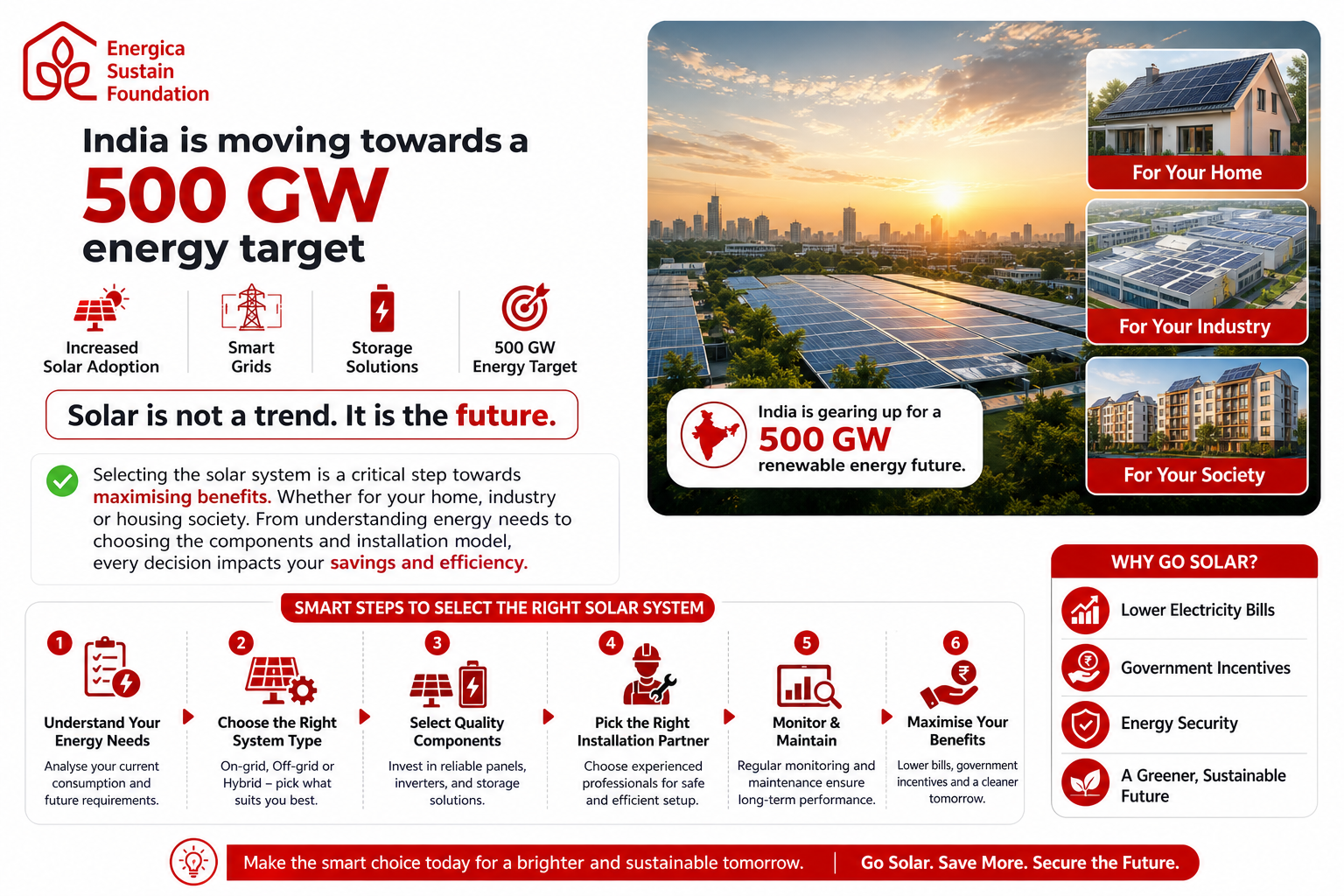
India is moving towards a 500 GW energy target, with increased solar adoption, smart grids, and storage solutions. Solar is not just a trend; it is the future.
Selecting the right solar system is a critical step towards maximising benefits. Whether for your home, industry, or housing society, every decision impacts your savings and efficiency. With expert guidance from the Energica Sustain Foundation, you can make informed decisions and ensure a smooth transition to solar energy.
Planning to install a system? Connect with the Energica Sustain Foundation. Start your solar journey today.